Cascadia Header Graphic
More Articles
Cascadian Mayors Flirt With Romance of High-Speed Rail
June 15, 2010

BIV HeaderVancouver risks being isolated from a high- speed rail corridor on the West Coast of North America, along with its business and tourism benefits, as efforts to build U.S. portions of the corridor progress faster than any initiatives on this side of the border.

Vancouver Mayor Gregor Robertson signed a pact with the mayors of Seattle and Portland on June 9 to push to secure a high-speed railway service through the Pacific Northwest, but the plan still faces many obstacles – physically, financially and politically – before it will be realized.

More.


Stay focused on rails and trails on the Eastside
April 15, 2010


bnsf map


The daily commute is going to change from the pavement up, and it will be for the better if we have the imagination and wit not to go with the traffic flow.

Changes great and small are coming.

In May, the 42-mile Eastside rail corridor, which the Port of Seattle recently bought from BNSF Railway, will be parsed out and resold to King County, Sound Transit, the City of Redmond and two regional utilities.

All those entities will help the Port recover its $81 million purchase price as they acquire ownership and easements to maintain freight service in the corridor, develop passenger rail and bicycles trails, and plan water and power lines.

More.


Cascadia: The New Frontier
How the 2010 Winter Games may help turn a decades-old dream for Cascadia into reality
February 3, 2010

Cascadia MapEver since Vancouver won the bid to host the 2010 Winter Olympics, there has been a strong effort to market the event as “Canada’s Games.” It’s only natural, of course: the federal government wants to use the Olympics to enhance our national identity, and VANOC wants to gain a national scope to raise the commercial value of Olympic sponsorships.

But still, when international visitors get their first glimpses of Vancouver as they pass the stunning Haida and Coast Salish art at YVR’s international terminal, when they catch their first whiff of ocean air outside the arrivals doors, when the SkyTrain crests that first ridge on the trip downtown, revealing the dramatic cut of the North Shore mountains, is it really Canada our guests will see?

The centre of Canada, after all – not just geographically but also in terms of culture, commerce, industry and politics – is far from here. Vancouver has much more in common, on all those fronts, with our neighbours in Seattle and Portland than we do with our counterparts in Calgary and Montreal. And there’s little doubt that, as far as the Olympics is concerned, Seattle has much more to gain than Saskatoon – or even Kelowna.

That is why there’s an equally strong effort, on the part of many people in the Pacific northwest, to claim these 2010 Games as their own and to use the 16-day event as a springboard for advancing what has, to this point, been a rather abstract notion of cross-border regional unity. That notion is called Cascadia.

More.


Bruce Agnew Discusses Sustainable Freight Transportation
February 2, 2010

Cascadia Center of Discovery Institute's Bruce Agnew recently became the chair a NAFTA-chartered commission focused on the issue of sustainable freight transportation.

More


Washington to get $590 million for high-speed rail improvements
January 28, 2010

Obama State of Union

The federal government will spend $590 million in stimulus money to improve rail travel times from Blaine to Portland.

The money represents the Northwest's piece of an $8 billion stimulus package for high-speed rail, to be announced Thursday in Florida by President Obama.

Only two-thirds of passenger trains run on time on the 3 ½-hour trip between Seattle and Portland, and the state is trying to boost that number to 90 percent. A series of small projects throughout Western Washington — some but not all of which the stimulus money would pay for — would save an estimated 833 hours of delays annually, according to the state. Ridership peaked in 2008 with 775,000 riders.

"Anybody who travels the I-5 corridor in our state knows that we need to find new, efficient options to get commuters and commerce moving. And anybody interested in boosting our state's economy knows that now is a great time to take action," said a statement from Sen. Patty Murray, D-Wash.

Murray, chairwoman of the Senate Transportation Appropriations Committee, has talked at least four times with Transportation Secretary Ray LaHood about funding the Pacific Northwest Cascades corridor — stressing that rail could reduce congestion on nearby Interstate 5, a spokesman for the senator said Wednesday.

Thirteen high-speed-rail lines serving 31 states will receive money, including $8 million for Oregon to improve trackways and Portland's Union Station.

Five round-trip Amtrak trains run between Seattle and Portland each day. Only two go between Seattle and Vancouver, B.C., so buses fill out the route. Delays caused by freight-train traffic, and various accidents or obstructions, are common.

Washington state had sought $1.3 billion to fund 26 rail projects from border to border, to prepare for eventually running eight round-trip trains to Oregon. Several projects already include at least partial funding from state tax increases in the 2000s.


New light-rail plan avoids downtown core
November 17, 2009

BNSF_LightRail

Newly-elected Bellevue City Council member Kevin Wallace has released plans for a light-rail route that would utilize the BNSF rail corridor and keep trains out of the city's central business district.

Wallace's plan, dubbed the "Vision Line," would place Sound Transit's East Link tracks along the BNSF corridor through South Bellevue and along 114th Avenue Northeast to serve downtown.

The Vision Line aims to protect residential homes and downtown businesses. But it adds another option to a growing list of alternatives for Sound Transit's East Link light rail project.

Wallace is asking that Sound Transit consider his plan as part of the East Link environmental-review process.

"What I've come up with will provide as good a ridership as any other alternative at a much lower cost," he told The Reporter.

The city council already recommended a route that would run along Bellevue Way Southeast and 112th Avenue Southeast before moving through a downtown tunnel below 108th Avenue Northeast.

Sound Transit voted in May to focus on those same routes, along with a highly controversial downtown surface line along 108th Avenue Northeast and 110th Avenue Northeast that critics say would disrupt business and increase traffic congestion.

The agency recently added another downtown option: one that would place surface tracks or a tunnel along 110th Avenue.

Wallace contends that all tunnel options will be too expensive.

Read the rest of the article.


Electric Car Industry Gets a Charge at Microsoft
King 5 News coverage of 6th Annual TransTech Conference featuring Rob Bernard
October 30, 2009


Seattle Expected To Be Key Market For Electric Cars
October 25, 2009

After years of hype, it looks like the mass-produced, all-electric car is really on its way.

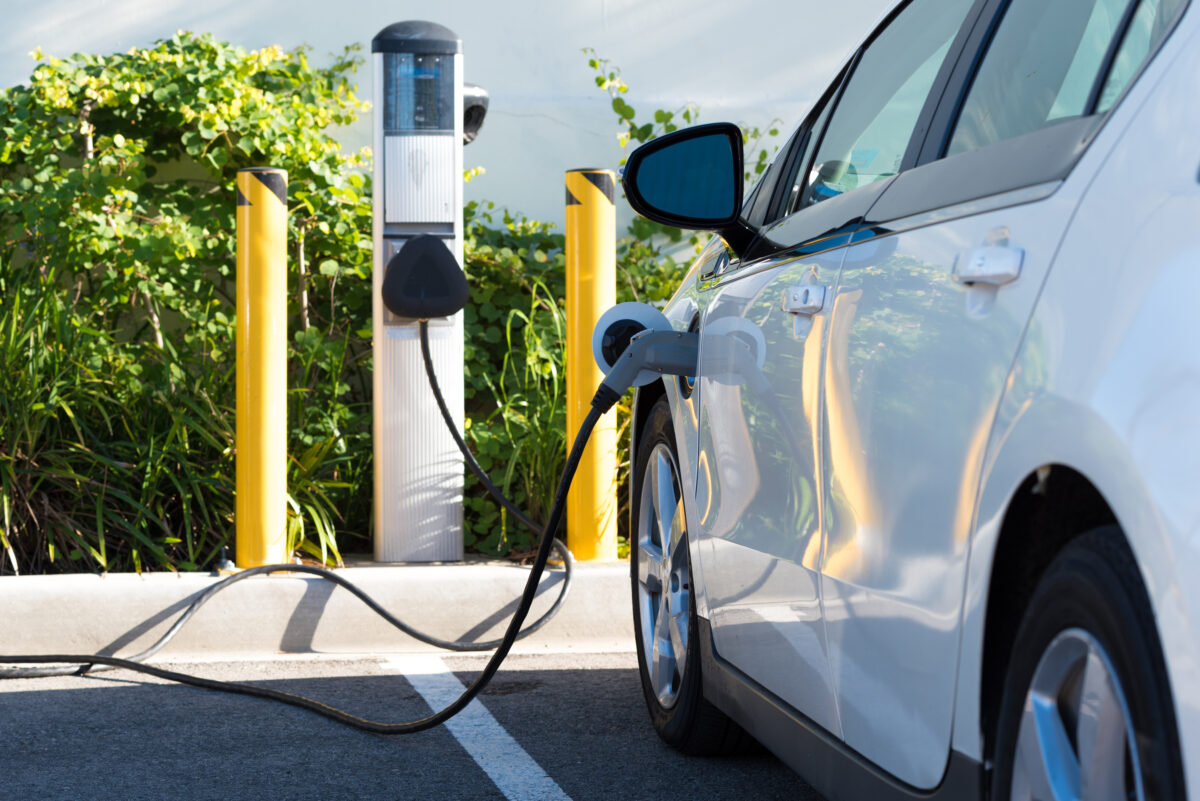
Puget Sound is poised to become one of the key markets for the initial wave of electric cars, in part because of plans to begin building next year a network of more than 2,000 charging stations throughout the region.

Funded by part of a $100 million federal Department of Energy (DOE) economic-stimulus grant, the charging stations are to the electric car what the cellphone-tower network was to the cellphone. Just as the phones needed towers to make them functional, the network of charging stations will make it practical to own a car that does not use gas.

By December 2010, drivers in our area should be able to buy mass-produced, plug-in electrics that create no emissions and run for pennies a mile.

"It's going to blow people's doors off how fast this transition is going to happen," predicted U.S. Rep. Jay Inslee, who took a spin around the Microsoft campus Friday in an all-electric Ford Focus.

As part of the DOE grant, the Puget Sound area has been promised 1,000 Nissan LEAF all-electric cars, which will be sold here beginning in December 2010.

But that's only the start.

Because of the charging network, the Seattle area will be one of the major markets for other brands of electric cars, said Steve Marshall, a senior fellow at Discovery Institute's Cascadia Center, a Seattle-based transportation think tank. Ford, for example, plans to bring an electric commercial van to the area in 2010, one that will run for about 3 cents a mile and is designed for small-business owners and package-delivery fleets.

The electric Focus will hit the market in 2011, as will the Chevy Volt, a car that can drive the first 40 miles on electricity before a gasoline-powered engine kicks in, driving a generator that provides electric power beyond 40 miles.

Inslee predicts that within a decade, a significant portion of the American car fleet will be made up of electric cars, and "we're trying to make Washington the epicenter of this revolution," he said.

The car companies know it. "Washington is a lot more aggressive and more hep on this than any part of the country," said David Berdish, manager of sustainable business development for Ford Motor Co.

Meeting at Microsoft

On Friday, state and federal officials and business leaders gathered at the Microsoft campus for a Cascadia-sponsored conference called "Beyond Oil." They talked about building sustainable communities and ensuring the electrical grid could handle the power draw if thousands of people all tried to recharge their cars at the same time.

Outside, a half-dozen Tesla roadsters — all-electric sports cars that cost about $100,000 — were lined up in the parking area. But it was the somewhat homely Ford Focus, which arrived on a flatbed truck after an overnight trip from San Francisco, that attracted the buzz, in part because it's price is expected to be within the reach of the average family when it comes to market in 2011.

The Seattle area is expected to be a leader in electric cars for a couple of reasons. (More)


New Federal Grants Spur New Technologies
Beyond Oil Conference, Oct. 23-24, 2009
October 20, 2009

Timetable The Northwest will soon see a growing number of plug-in cars along with the public charging stations that Alan Mulally, President and CEO of Ford, emphasizes are key. Tesla, Nissan, Chevy, Fisker, Toyota, among others, have all committed to producing plug-in vehicles. This transformative technology forms a foundation for the Sustainable Communities Initiative recently launched by the U.S. Departments of Energy, Transportation, Housing and Urban Development and the Environmental Protection Agency. 

The Northwest has received several competitive federal grant awards that will help establish the charging and information infrastructure for plug-in cars. Our conference will explore how these grants will be implemented. This year the U.S. Department of Energy announced $2.4 billion in grants for plug-in technologies. Nissan and eTec received a $100 million federal grant with help from Idaho National Laboratory to install charging stations for owners of the all-electric Nissan Leaf in several regions, including Seattle, Portland and the Willamette Valley. The Puget Sound region also received a grant of $15 million for the Clean Cities petroleum-reduction project. These and other competitive federal grant awards will help establish the charging and information infrastructure for plug-in cars.

speakers This year’s Cascadia Center TransTech Energy conference, to be held at Microsoft’s Redmond, Wash., campus will be hosted with co-sponsors Microsoft, Clean Cities, Ford and Idaho National Laboratory. This will be the sixth conference focusing on the combination of transportation, technology and energy. Three years ago, Cascadia Center hosted a pioneering session to examine the potential of plug-in electric vehicles, and the conferences have continued to grow in scope and influence. On the first morning of this year’s conference Clean Cities will host panels with biofuel and electricity experts to discuss the future of local, sustainable alternative fuel in our region in the context of a “100 Mile Fuel Diet.” Sessions this year will also cover upcoming legislation and the potential impact to fleets in Washington State, and an introduction to the Evergreen Fleets certification program to help reach emission reduction goals.


Northwest Is Poised To Lead In Developing Electric Car Transition
October 1, 2009

Cars that run on electricity have made it to prime time. The new Jay Leno Show featured an all-electric Ford Focus in a challenge race. Drew Barrymore drove the battery-powered Ford around a track next to the NBC studio setting the pace for others to come.

For most viewers, this was the first time they saw an all-electric car in action. And instead of a tiny, underpowered car, they saw a normal-looking, five-passenger car speed through turns.

Leno has, in effect, made a public-service announcement: Cars that run on electricity are real and will help the economy, national security and the environment.

The Northwest is also getting ready to take a prime-time role in helping to accelerate and integrate this technology. Environmental and business leaders will gather next month in Redmond to think through the infrastructure needs to support it.

Last year the U.S. economy went into a tailspin, in part because we were spending over a billion dollars a day to buy foreign oil. Although the recession slashed oil prices, they are creeping back up. In August, the U.S. spent more than $25 billion to buy foreign oil.

In his first week in office, President Obama said, "America's dependence on oil is one of the most serious threats that our nation has faced. It bankrolls dictators, pays for nuclear proliferation, and funds both sides of our struggle against terrorism."

Replacing oil with electricity in transportation may be the best solution reasonably at hand.

(More)


Second Daily Amtrak Train to Vancouver, B.C., Starts Aug. 19
August 12, 2009

Amtrak Cascades will start a second daily round-trip train from Seattle to Vancouver, B.C., on Aug. 19th.

The Washington State Department of Transportation announced the start date Wednesday. The long-awaited service will run at least through the 2010 Winter Olympics in February in Vancouver.

Amtrak was ready to begin the second round-trip train about a year ago, but Canada's insistence that the railway cover $1,500 (Canadian) a day in costs for customs staff in Vancouver derailed the plan.

That fee has now been waived, at least for the next seven months, by the Canada Border Services Agency after pressure from train supporters and officials on both sides of the border.

The new train will make it easier for business travelers and vacationers from Western Washington to take quick trips to Vancouver. It will be especially convenient for travelers to B.C. during the Feb. 12-28, 2010, Winter Olympics, since vehicle border crossings will be busy and private vehicles will be restricted in much of downtown Vancouver.

It also will be convenient for travelers from Portland who will be able to get to Vancouver on one train (the new train originates in Portland). Previously there was a lengthy delay and train change in Seattle.

The new service will begin the evening of Aug. 19th with a northbound train from Seattle.

Trains will leave from Seattle for Vancouver at 7.40 a.m. (current train) and 6.50 p.m. (the new train) daily.

Trains will depart Vancouver at 6.40 a.m. (new train) and 5.45 p.m. (current train). The trip takes about four hours one-way.

Amtrak Cascades is operated by Amtrak in partnership with the Washington and Oregon Departments of Transportation.

More: WashDOT press release;

Amtrak Cascades Web site


Cascadia Rail Week Highlights Cross-Border & Interstate Ties
July 3, 2009

Cascadia Rail Week - including events in Portland May 27 and Seattle May 28 - heightened awareness of the need for improved intercity passenger and freight rail systems, and for longer-term efforts to establish high speed rail in our mega-region. Sharing key insights were representatives of state and city governments, the Federal Railway Administration, the U.S. Congress and Senate, and the Washington state legislature, plus think tanks, train manufacturers, railroads, and commuter rail advocates and experts.

Rail week left no doubt there is a well-equipped coalition coming together to advance a crucial 21st Century rail agenda that builds on Northwest investments already made. Press coverage was considerable; in newspapers and on radio and television. Links are below.

NEW: "Amtrak Cleared For 2nd Daily Train To Vancouver, B.C.," Seattle Times, 7/3/09

More TV clips, 5/27/09, Portland: KOIN 6 - 2 evening news segments; KATU 2 - evening segment; KGW 8 - noon segment

U.S. Rep Earl Blumenauer video presentation, shown at 5/27 & 5/28 events

"Light Rail Rolls, And Commuter Rail Percolates," Lance Dickie editorial column, Seattle Times, 6/12/09

"All Aboard! Oregon Eligible For High Speed Rail," Eugene Register-Guard, 6/4/09

"Biden: High Speed Rail Money On The Way," Seattle PI.com, 6/3/09

Full entry


Letter From Governors Gregoire And Kulongoski To DOT Sec. LaHood On High Speed Rail Grants
May 11, 2009

(Excerpt)

Dear Mr. Secretary:

We write to applaud the bold vision and federal funding commitment of this Administration to support the existing and planned high-speed rail system in the United States. The $8 billion for high-speed and intercity rail investments made available through the American Recovery and Reinvestment Act (AARA), further supported by the Administration’s budget proposal to provide $1 billion annually for FY 2010 through FY 2014 for high-speed rail development, are important infrastructure investments that will improve mobility, create and preserve jobs, and benefit air quality across our country.

Washington and Oregon are celebrating the 10th anniversary of the Amtrak Cascades, our signature high-speed rail corridor service. This international corridor serves not only Washington and Oregon, but also Vancouver, British Columbia, and Canada. Growing through state and federal investment, this services has carried more than six million passengers over the last 10 years, and has shown an 82% increase in ridership since 1998. In 2008, ridership reached nearly 775,000 passengers, the most successful year in the history of the service. In November 2008, the on-time performance of the Amtrak Cascades reached a five-year high of 81.7%.

.....As you develop the Department's strategic plan for high-speed rail, we ask that you consider applying the following criteria to evaluate projects proposed for ARRA or other funding, prioritizing projects that:

  • Expand and improve existing successful high-speed rail service;
  • Demonstrate substantial public benefits, including advancing environmental climate change goals, energy savings and congestion reduction, particularly in areas adjacent to Interstate highway systems to provide travel options along with job creation;
  • Reward the efforts of States that have demonstrated prior support for a high-speed rail programs on a State, regional and local level with a track record of positive growth in terms of service and ridership
  • Build on community support for high-speed rail service and expansion; and,
  • Complete program-level ready to implement and construct projects.
  • Read the full letter


    With Olympics on Horizon, Coalition Urges Action to Accelerate Second Amtrak Cascades Service to Vancouver
    May 6, 2009

    In a letter sent to Canada's Minister of Public Safety Peter van Loan, a cross-border coalition made up of think tanks, business executives and elected officials encouraged the Canadian government to relax customs fees for train travel between Washington State and British Columbia. The signatories wrote, "...we urge you to expand the fee waiver period from June 1, 2009 to June 1, 2010 to allow commencement of service as proposed by Amtrak and Washington State Department of Transportation."

    As the commencement date for the 2010 Winter Olympics in Vancouver approaches, at issue in the immediate short term is the ability of "Amtrak to test and market the service (a second Amtrak Cascades train) during the busy summer tourism and cruise ship season." The letter cites a study by the Border Policy Research Institute that found that "implementation of the service over a year would allow the federal, provincial and municipal governments in Canada to collect $1.87 million in GST, PST and room taxes combined as a result of increased passenger travel." Click here to read the full letter.


    SR 99 Deep Bored Tunnel Costs - Radio Transcript
    April 28, 2009

    (Excerpt)

    Dave Ross:.....Bruce, I think it's fair to say that the whole tunnel idea was dead until you guys resuscitated it.

    Bruce Agnew: Well, we did bring some international experts who'd had experience in building tunnels in Shanghai, Madrid, and North America and they told us that the tunnel would be around a billion dollars and I agree with the Governor. The DOT added a 27% contingency, and they're currently at $1.9B for the tunnel. So if you look at worldwide experience in tunneling and advances in technology, the Governor's figures are absolutely correct. The other important factor is that the DOT decided to go with a single bore versus a double bore, which means less labor, less materials and one machine versus two....(Additionally) Sound Transit's bids on the Beacon Hill transit tunnel came in about 22% below estimate and just, I think it was last week, San Francisco BART's bids on a tunnel came in at 45% below the engineering bids and there were five bidders. So there's a very hungry environment for contractors and the sooner we get this bored machine going, the better we're going to be.

    {......}

    Dave Ross: As you've mentioned, there have been deep-bored tunnels done before, in Beacon Hill, yes. But in Beacon Hill, that's mainly residential. There are no gigantic buildings you're going under for that tunnel. Has it ever been done? Has a tunnel this large ever been bored under a major urban area before?

    Bruce Agnew: Absolutely. Shanghai, Madrid, Paris. They're looking at a deep-bored tunnel for a Port of Miami and the I-710 freeway in Los Angeles.That's why I think the DOT and the project team came around on this is because they got the information about the 20 projects that are currently underway around the world and those that have been completed on time and on budget. The average costs of those was somewhere around 350 million dollars a mile so even if you take a look at the DOT's budget, which estimates it would be about 1.17 billion per tunnel-mile, there's a lot of fudge factor built into that.

    {...}

    Bruce Agnew:....the other point I would make to your listeners is that you've got to take a look at the history of our state DOT in the last five to ten years in terms of bringing projects in on time and on budget. You look at the Tacoma Narrows Bridge, the I-5 widening in Everett which were built under a new design-build procedure which brings in the talent of the private sector early on. Those are good examples, albeit they're highway projects, but they're good examples of the management of this DOT in terms of (completing within budget) these projects and that story isn't told enough, I think.

    Dave Ross: You are complimenting the DOT on bringing things in on...You're a conservative think tank, right?

    Bruce Agnew: Well yes, so we applaud government efficiency. And as someone who has a beach cabin up north in Snohomish County, I go through Everett all the time and it's just remarkable what that widening project has done in terms of traffic flow through Everett. It's great to see that.

    Full transcript

    Audio of full interview

    12/08 - 4/09 Tunnel News & Opinion


    Seattle Tunnel Would Be The World's Widest
    April 24, 2009

    The state legislature has approved a deep bored tunnel to replace the Alaskan Way Viaduct, and Cascadia Center was instrumental in educating decision-makers. This recent article highlights our role.

    .....As recently as last December, the bored tunnel was dismissed as too expensive by the viaduct project team. But then the Washington State Department of Transportation realized it could build a tunnel with a single bore instead of a double bore, and the cost estimate fell by almost $900 million. “It's less labor, less materials, one machine versus two,” said John White, viaduct program director for WSDOT.

    ...Last year two 51-foot diameter tunnels were built in Shanghai, China, according to a report by Arup that was commissioned by the Cascadia Center, which is part of the Discovery Institute. A forceful advocate for the bored tunnel, Cascadia paid Arup $35,000 for that report, according to Cascadia's policy director, Bruce Agnew. In early December, while the viaduct project team was eliminating the bored tunnel from its list of possibilities to replace the viaduct, Cascadia brought together a group of tunneling experts who wrote a letter to WSDOT saying its cost estimates for the bored tunnel were too high. The group wrote to WSDOT Deputy Secretary David Dye and said a bored tunnel could be “completed in the 60 months period with a price of $2 billion or less.” That letter was authored by Richard Prust of Arup, Vladimir Khazak of HNTB, Dick Robbins of the Robbins Co., independent consultant Kern Jacobson and Gerhard Sauer of the Sauer Corp.

    (Full article)

    More info.:

    Cascadia's Bruce Agnew Discusses Tunnel Approval, & Cost Issues, KIRO-FM 97.3, Dave Ross Show, 4/28/09

    Cascadia's Bruce Agnew Interviewed On Tunnel Decision, KOMO 1000 AM, Seattle, 4/23/09


    High Speed Rail In The U.S.: Anyone Aboard?
    March 27, 2009

    To Americans, high-speed trains evoke the gee-whiz factor of a trip to Tomorrowland: Ride futuristic cars that zoom you to a destination in a fraction of the drive time — without fighting through an airport. Read a book, do paperwork, take a nap while whooshing ahead in high-speed comfort. To governments, they evoke benefits to the common good — reduced freeway traffic, less carbon pollution, more jobs. But this country never has built a high-speed "bullet" train rivaling those of Europe and Asia, where passenger railcars have hit speeds nearing 200 mph for decades. Since the 1980s, every state effort to reproduce such service has failed. The reasons: usually poor planning and simple mathematics.

    Yet President Obama, intent on harnessing new technology to rebuild the devastated economy, allocated $8 billion for high-speed rail in his stimulus plan.It sounds good, but that amount isn't enough to build a single system, or to increase existing speeds dramatically, transportation experts say.

    California is the only state with an active project, and its proposed cost is more than five times the stimulus amount. The $42 billion plan is far from shovel ready — local approvals are needed — but it's farther down the track than any other state with an outstretched hand for a slice of Obama's high-speed pie.

    Rail advocates say anything is better than nothing when it comes to modernizing U.S. train transportation, which needs all the help it can get. Others say the stimulus injection is like adding a teaspoon of water to the ocean and calling it high tide. (More)


    Friedman Calls For Carbon Tax To Spark Change
    March 10, 2009

    New York Times columnist Thomas L. Friedman, who packed a Portland gymnasium Monday, called for a carbon tax -- perhaps offset by a payroll-tax cut -- to spur a green revolution. Absent urgent action, especially by the United States, human beings will heat up, burn up and choke up the planet, said Friedman, drawing from his latest book, "Hot, Flat and Crowded."

    The three-time Pulitzer Prize winner drew opinion leaders to his talk, including Gov. Ted Kulongoski who discussed climate-change response strategies with Friedman before his speech. The two agreed on the difficulty of getting Americans to face changes in lifestyle and prices as the economic model of endless consumer credit collapses, Kulongoski said.

    In his talk, Friedman said the next industrial revolution would be green, centering on energy technology. Genuine change won't happen, he said, without economic incentives. "Without a price on carbon that makes dirty fuels more expensive and clean fuels cheaper," Friedman said, "we won't get a green revolution at scale." (More)


    Metro Transit Fears $100M Potential Potential Shortfall; Service Cuts
    February 19, 2009

    Plummeting sales-tax revenues could leave Metro Transit with a $100 million funding gap and potentially "catastrophic" cutbacks in bus service next year, the agency warned Tuesday. Unless the Legislature agrees to authorize a local option motor-vehicle excise tax, King County officials said, the free-fall in retail sales will likely translate into a 20 percent cut in bus service.

    The amount of lost money is equivalent to what it takes to provide daily bus service for 75,000 passengers a day, Metro reported Tuesday. King County Executive Ron Sims said that would potentially mean reducing service to early 1990s levels.

    More


    prev | 1 - 19 of 19 | next | search


    Discovery Institute Logo
    For More Information Contact:
    Cascadia Center
    208 Columbia St. — Seattle, WA 98104
    206-292-0401 — Fax: 206-682-5320
    cascadiacenter@discovery.org

    About Cascadia divider dot Contact divider dot Search divider dot Discovery Home
    Dotted Line